JLPT preparation update

Well, I finally started taking some official Japanese Language Proficiency Test practice mini-quizzes to assess where I’m at. I’ve been studying Japanese off and on for the last decade, but my inconsistency meant that I had forgotten half of what I had “learned” each time I resumed good study habits.

All in all, not too bad:
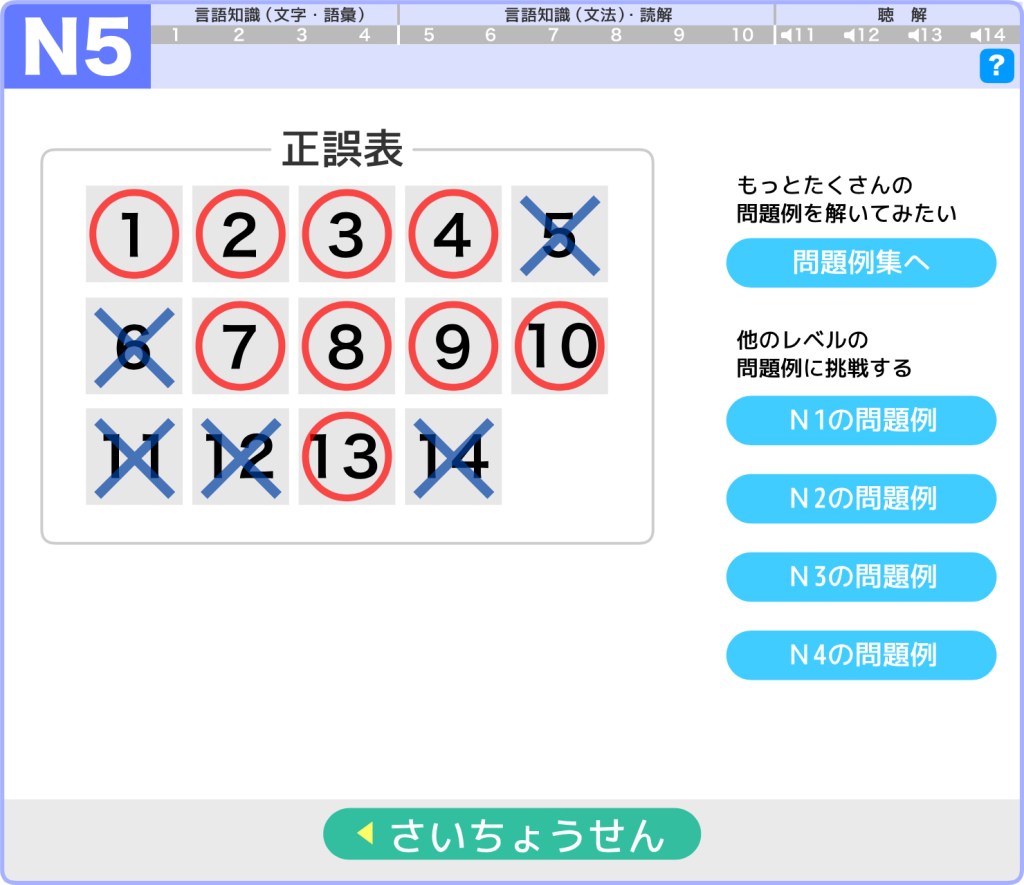
9/14 is pretty reflective of where I am, with me failing most of the listening component. I’m also trying to review a lot of test-related vocabulary so I don’t continue to be confused by certain kinds of instructions.

I’ve set a personal goal of taking the N5 level test in 2021. For those unfamiliar, it’s offered twice a year for those living in America, and only at select sites. I’ll likely have to drive to Arkansas to take it, so we may very well make a vacation out of it and spend a few days there.

One of the current weaknesses I’m noticing is that I haven’t paid attention to the specific details of the kanji characters I’ve been studying. Several of the test questions have tiny extra (or missing) brush strokes. It’s like those “which picture is different” games you saw in the Highlights magazine as a child, except there is only one right answer and you must already know it ahead of time.

Listening is tough because I’m also realizing that my question-related vocabulary, such as “which person” or “which one” or “which place” is not as firmly cemented in my mind as I had previously thought.

I’m going to do my best, and I hope the rest of you who are language learners will do so too!

Learning

As far back as I can remember, I’ve been fascinated with language: in music, in spoken word, and in writing. Part of what I love is the mystery of it; to know that in this moment, someone across the world might be having the very same thought I am, and yet we will never share that moment because of the invisible barrier between us.

Language embraces that mystery and also creates mysteries of its own. Language offers a glimpse into the worldview that is deeply ingrained inside both the grammar and the art of expression. It’s almost like a puzzle to figure out, and even after years of study you may find new pieces to fit in every day.

Over the last decade or so, I’ve been increasingly interested in and passionate about learning Japanese. Part of my interest is due to the large differences between American and Japanese culture, and part is due to the challenge of learning a language that uses kana and kanji symbols rather than the Roman alphabet. Once I have mastered at least conversational Japanese, I would love to visit Japan for at least a week or more. I would also love to pass the JLPT (Japanese Language Proficiency Test) level N5.

Japanese culture has always interested me because the country’s history of remaining closed from the Western world has helped to avoid many of the historical problems that colonized countries have faced. In the 1870s, the Japanese government formally legislated freedom of religion, and while the majority of Japanese people are nominally part of the Shinto faith, a small minority are Protestant or Catholic Christians.

One of the difficult discoveries as I’ve delved more into Japanese culture is the fact that LGBTQIA+ persons are generally silenced and looked down up (but in a polite Japanese manner). Ironically, most Japanese people know real LGBTQIA+ people through television show hosts that demonstrate an exaggerated stereotype. Within families and schools, however, LGBTQIA+ people are often afraid to come out due to intense societal pressure to live up to the expectations that family and teachers have for their lives. While statistics cannot be isolated just to LGBTQIA+ teens, Japan has one of the highest youth suicide rates in the world.

I’m still trying to figure out what I will do with my Japanese language knowledge as it grows. Perhaps some kind of outreach to Japanese LGTBQIA+ Christians? Who knows…