
I firmly believe that God creates all humans with an innate desire for relationship: first with Himself, and secondly with other humans. We see this reflected overtly and covertly throughout Scripture. Growing up in the church can nourish and foster these God-given desires in ways that embody the best of what God intended for humanity. Celebrating the kinship of family, creating congregational community, nurturing personal friendships, and honoring lifelong commitment through marriage are all amazing expressions of humanity’s innate desire that are modeled within the church. However, what begins as a life-giving experience in childhood suddenly turns to cruelty when an LGBTQIA+ Christian teen comes out. This same God-given desire for relationship is suddenly shamed and declared irreparably corrupt. In fact, many family members, friends, and churches suddenly begin withholding or severing the very relationships that are meant to nourish and support. Even if a teen is a virgin and is simply trying to reconcile their sexuality with their faith, they are effectively isolated from the very people who vowed to journey with them during their profession of faith. The spiritual, emotional, and mental harm from this shunning is tangible, and in some cases, leads to loss of faith and even self-harm.
One of my hopes and dreams for the Western Christian church is that it will at some point celebrate difficult questions as a way to lean into God and engage in Christ-centered discernment. In my previous post, I discussed nuance and how complicated questions from LGBTQIA+ Christians merit consideration by the heterosexual majority. Americans in particular seem to be fixated with binary answers: yes or no, black or white, this or that, but certainly nothing that resembles in-between. Unfortunately, this socio-cultural tendency has infiltrated many Western Christian churches over the past several decades. These same kinds of struggles are evident in the New Testament in both Romans and Acts, where the early Christian church struggled to know what to do with “the others” (Gentiles). In these books, I read about Christ’s desire for faith as well as spiritual unity despite differences. The behavior of many conservative Western Christians unfortunately stands in stark contrast to Romans and Acts. The difficult questions are a chance for us to grow together and lean into God for wisdom. It’s part of the ongoing sanctification process that Christ is working in all believers.
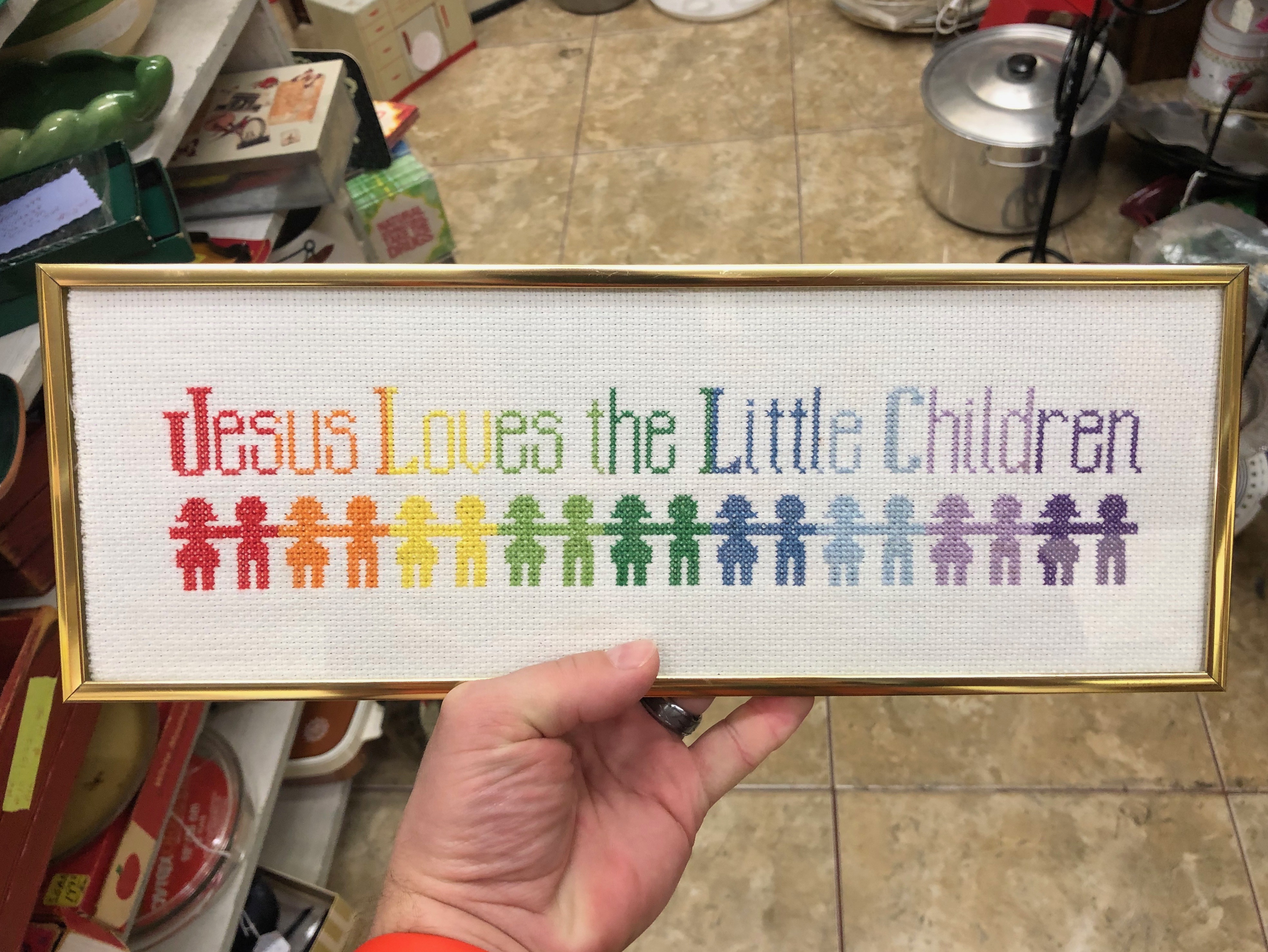
Below are several complicated scenarios facing LGBTQIA+ Christians that defy an “easy” answer. Hopefully, these will inspire both self-reflection and earnest prayers of discernment. Giving time and space to ponder the implications of each statement and pray accordingly is difficult because of the tendency to formulate a response before finishing reading. Are we able to take on the perspective of “the other” in faith that the Holy Spirit might speak to us too?
Question 1:
Genesis 2 is a difficult chapter for me to read, particularly God’s statement that it isn’t good for humans to be alone. I’ve struggled with feelings of isolation and loneliness since becoming aware of my sexuality, and I long for the companionship described in this passage. For Adam, God creates a “helpmate” to help remedy this loneliness in Genesis 2:18. Later, in Genesis 2:23-25, Scripture actually highlights the sameness between Adam and Eve (rather than biological difference) and then highlights the importance of marriage in creating kinship. In the time since this Scripture was written, the Abrahamic covenant to be fruitful and multiply has been fulfilled through the coming and teachings of Jesus. The church seems to place heterosexual marriage on a pedestal, but I’m not sure marrying the opposite gender would be wise for me because I’m bisexual. Many family members and friends disapprove of me, but I don’t think they even really understand what I’m experiencing. I haven’t even been sexually active at all, but I am physically attracted to men, while being romantically, emotionally, and spiritually attracted to only girls. What sort of suitable helpmate will God provide for me in my loneliness, given my sexuality?
Question 2:
In 1 Corinthians 7, the apostle Paul states he is gifted in the vocations of both chastity and lifelong celibacy, but he specifically acknowledges that every person has been given different gifts by God. He also acknowledges that the physical aspect of sexuality (and the corresponding self-control) must be a factor in the decision between lifelong celibacy and marriage. Most notably, however, Paul explicitly states that marriage is an acceptable option for those who do not thrive in the pursuit of chastity and lifelong celibacy. As a gay Christian, I’m a bit confused about how to proceed in my life because while I am chaste, it is a daily struggle. I’m attracted exclusively to others of the same gender, not just physically, but also romantically, spiritually, and emotionally. I’ve been praying for God’s guidance through the work of the Holy Spirit but I also don’t feel a gifting or equipping to pursue life-long celibacy, even though other Christians tell me I must. If I don’t discern a call to the vocation of celibacy, should I marry someone of the same gender to be faithful to what Scripture says? What about the companionship that marriage provides? Why am I excluded from that?
Question 3:
Growing up, I never felt very boyish despite doing all the typical boy things. When I was twelve, I started growing breasts and ever since then, I’ve been hiding my body and trying to wear baggy clothing. After my parents found out, we visited a doctor who started using the word “intersex” to describe my experience. We got some genetic testing done, but now my parents don’t really hug me much any more. When we talked with my pastor at church, he said I shouldn’t ever talk about this with anyone else because it might upset them. I feel like a freak because I have boy parts down there, breasts, and XX chromosomes. In Matthew 19:12, Jesus talks about eunuchs who were born this way, and he allows these eunuchs to discern for themselves what is best regarding marriage. Acts 8:26-40 recounts the Ethiopian eunuch who ends up being baptized by Philip and fully welcomed into the church. But all I feel is alone. I’ve always wanted to get married and have a family of my own someday, but I have no clue how that would even work, because I can’t even figure out which gender I really am. How do I figure out which gender to marry? And where is God in all of this? And why is there all this secrecy and shame at church?
 On the Wings of the Dawn